Hurricane season runs June 1 through November 30 in Wilmington, and if you’ve lived here for any length of time, you know these storms are a serious reality. From Floyd to Florence, our region has experienced devastating hurricanes that have caused billions in damage—including significant damage to HVAC systems.
At Kool Ducts Heat & Air, we’ve helped countless homeowners recover after major storms. But we’ve also learned that proper preparation can prevent much of the damage we see. Here’s your complete guide to protecting your HVAC investment before, during, and after hurricane season.
Pre-Storm HVAC Preparation
When a hurricane threatens the Wilmington area, you have a checklist of preparations to make—securing outdoor furniture, stocking supplies, possibly evacuating. Your HVAC system should be part of that checklist.
Secure Your Outdoor Unit
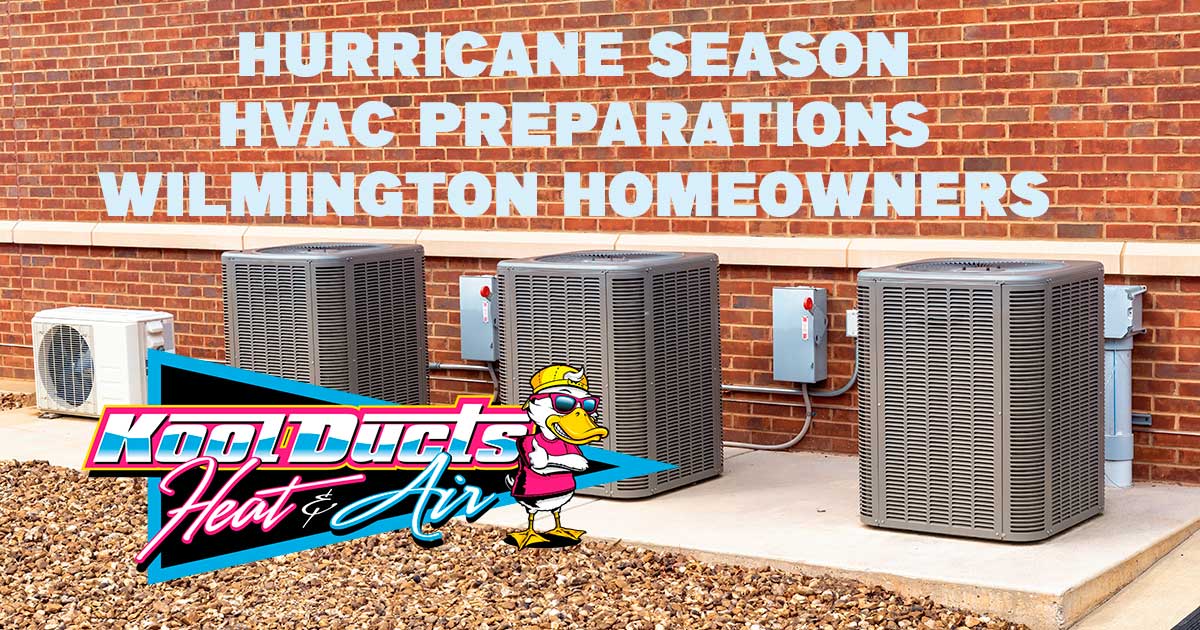
Your outdoor condenser unit is the most vulnerable part of your HVAC system during a hurricane. It sits outside, exposed to wind, rain, and flying debris. Here’s how to protect it:
- Anchor the unit: Ensure your condenser is properly secured to its pad. High winds can shift or topple unsecured units.
- Clear the area: Remove any loose items near the unit that could become projectiles—patio furniture, potted plants, yard decorations.
- Trim nearby vegetation: Cut back any branches or shrubs that could break off and damage the unit.
- Consider hurricane straps: For homes in high-risk coastal areas like Wrightsville Beach or Carolina Beach, hurricane straps provide additional security.
The Cover Debate: Should You Cover Your Unit?
This is one of the most common questions we receive. Our recommendation:
💡 Our Recommendation on Covers
For wind protection: A plywood barrier on the windward side can deflect debris. Don’t fully enclose the unit.
Don’t use tarps: Full covers can trap moisture, promote rust, and create a sail effect that increases wind damage risk.
After the storm: Remove any barriers immediately to allow proper ventilation.
Turn Off the System Before the Storm
Before the storm arrives, turn off your HVAC system at both the thermostat AND the circuit breaker. This protects against:
- Power surges when electricity fluctuates or is restored
- Damage from running the system if debris has entered
- Compressor damage from cycling on and off during outages
Install Surge Protection
Power surges during and after hurricanes destroy countless HVAC systems. A whole-home surge protector (installed at your electrical panel) combined with a dedicated HVAC surge protector provides essential protection. This is an investment we strongly recommend for all New Hanover County homeowners—not just for hurricanes, but for summer thunderstorms as well.
🌀 Pre-Storm HVAC Checklist
- Verify outdoor unit is properly anchored
- Clear debris and loose items from around condenser
- Trim overhanging branches
- Turn off system at thermostat
- Turn off HVAC circuit breaker
- Document system condition with photos (for insurance)
- Know your unit’s model number and age
- Have your HVAC contractor’s contact information ready
Need Pre-Storm HVAC Inspection?
We can assess your system’s vulnerability and recommend protection measures.
Post-Storm HVAC Inspection
After a hurricane passes and it’s safe to assess your property, resist the urge to immediately restart your HVAC system. Taking time to inspect first can prevent further damage.
What to Check Before Turning On
⚠️ Critical: Do NOT turn on your system if you observe:
- Standing water around the outdoor unit
- Visible damage to the condenser housing or fan
- Debris inside the unit
- Refrigerant lines that appear damaged or disconnected
- Electrical connections that look corroded or damaged
- Any flooding in your home near the air handler
Flood Damage Signs
If your outdoor unit was submerged or partially submerged in flood water, professional inspection is mandatory before operation. Flood water contains contaminants that can damage electrical components and create safety hazards. We see this frequently in low-lying areas and coastal communities like Harbor Island, Bradley Creek, and Masonboro.
When to Call a Professional
Call us for a post-storm inspection if:
- Your unit was exposed to any flooding
- You see visible damage to any component
- The system doesn’t start normally after restoration of power
- You hear unusual sounds when starting
- The system runs but doesn’t cool or heat properly
- You smell burning or unusual odors
Common Hurricane Damage We See
After major storms, we respond to hundreds of service calls. Here’s what we typically find:
Condenser Damage from Debris
Flying debris is the most common cause of hurricane HVAC damage. Branches, fencing, roofing materials, and other projectiles can:
- Dent or crush the condenser housing
- Bend or break the protective fins
- Damage the fan blades
- Puncture refrigerant lines
Electrical Surge Damage
Even with the power off, surges when electricity is restored can damage control boards, capacitors, and compressors. This damage isn’t always immediately apparent—a system may run initially but fail days or weeks later.
Flood Water Contamination
Flood water is particularly destructive because it:
- Contains salt (especially in coastal areas), which accelerates corrosion
- Carries sediment that clogs components
- Contaminates electrical connections
- Can enter the compressor and destroy it
Ductwork Water Intrusion
If your home experienced roof damage or flooding, water may have entered your ductwork. This creates serious issues:
- Mold growth throughout the duct system
- Damaged insulation that reduces efficiency
- Contaminated air circulating through your home
This is particularly concerning for homes in Forest Hills, Carolina Heights, and other areas with older homes that may have less robust roofing.
Wilmington’s Hurricane History & Your HVAC
Our region has a significant hurricane history that every homeowner should understand. Recent storms have taught us valuable lessons about HVAC protection.
🌀 Major Storms & HVAC Lessons
Hurricane Florence (2018): Category 1 at landfall but brought catastrophic flooding. We saw extensive flood damage to HVAC systems throughout the region, particularly in low-lying areas. Lesson: Flooding is as dangerous as wind for HVAC systems.
Hurricane Matthew (2016): Significant flooding in New Hanover County. Many homeowners who didn’t turn off systems before the storm experienced surge damage when power was restored.
Hurricane Floyd (1999): Devastating flooding. HVAC systems submerged in flood water required complete replacement.
📅 Hurricane Prep Timeline
Insurance & HVAC Damage Claims
Understanding how insurance handles HVAC damage can save significant stress and money after a storm.
Documentation Tips
Before hurricane season, document your HVAC system:
- Photograph the outdoor unit from multiple angles
- Record the model number, serial number, and installation date
- Keep maintenance records showing the system was well-maintained
- Save receipts from any recent repairs or upgrades
After storm damage, document everything before repairs:
- Take extensive photos and video of all damage
- Don’t discard damaged components until the adjuster approves
- Get written repair or replacement estimates
What’s Typically Covered
Standard homeowner’s insurance typically covers:
- Wind damage to outdoor units
- Debris damage
- Electrical surge damage (though sometimes limited)
Flood damage requires separate flood insurance. Standard policies don’t cover flood damage to HVAC systems. Given Wilmington’s flood risk, we strongly encourage all homeowners—especially those in coastal areas and flood zones—to carry flood insurance.
Working with Adjusters
We can work directly with insurance adjusters to document damage and provide professional assessments. Having a licensed HVAC contractor’s report often helps ensure fair claim settlements.
“After Florence, we helped hundreds of homeowners navigate HVAC claims. The ones who documented their systems before the storm and called us quickly after had the smoothest claims processes. Preparation matters—both for the storm and the paperwork that follows.”
Serving Wilmington’s Most Vulnerable Areas
Some Wilmington neighborhoods face higher hurricane risks due to their coastal or low-lying locations. We prioritize rapid response to these areas after storms:
Carolina Beach
Figure Eight Island
Harbor Island
Bradley Creek
Masonboro
Carolina Heights
Downtown
📍 New Hanover County Service Area
📍 Kool Ducts Heat & Air
📍 Visit Us: Kool Ducts Heat & Air on Google Maps
1501 Marstellar St, Wilmington, NC 28401
Post-Storm HVAC Inspection
If your system was exposed to hurricane conditions, let us inspect before you restart.
(910) 231-2804
📞 Call Now
Schedule Inspection
Get Free Estimate
Key Takeaways for Hurricane Season
Hurricanes are a fact of life in Wilmington. Protecting your HVAC system requires preparation before, caution during, and proper assessment after these storms:
- Prepare early: Don’t wait until a storm is approaching to secure your system
- Turn off and protect: Shut down at thermostat and breaker before storms arrive
- Invest in surge protection: This single investment prevents countless failures
- Inspect before restarting: A few minutes of inspection can prevent catastrophic damage
- Document everything: Photos and records make insurance claims smoother
- Know when to call: If there’s any doubt, have a professional inspect
Have questions about protecting your HVAC system this hurricane season? Call us at (910) 231-2804. We’ve helped Wilmington homeowners through every major storm and we’re here to help you prepare—and recover.